Glucose Oxidase Assay and Supplier Guide for Baking
Source glucose oxidase for baking with assay, dosage, QC, COA/TDS/SDS, pilot validation, and cost-in-use guidance for industrial buyers.
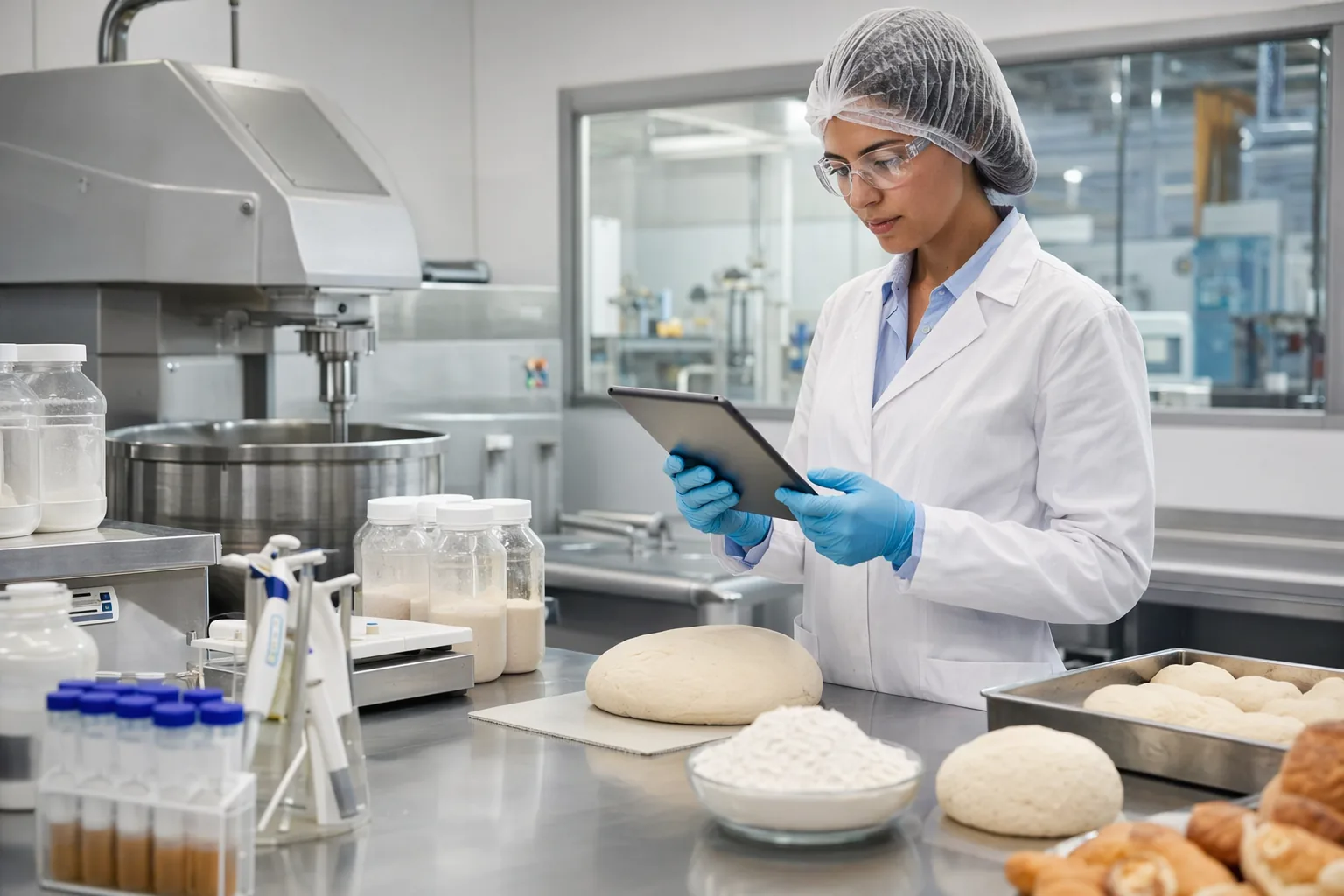
A practical B2B guide for bakeries, premix producers, and flour improver manufacturers evaluating glucose oxidase for dough strengthening, consistency, and clean process control. Written for bakery manufacturers, flour mills and ingredient distributors buying glucose oxidase in bulk; grades and volumes are quoted per order.
Why Baking Buyers Specify Glucose Oxidase
Glucose oxidase is an oxidoreductase enzyme used in baking systems to support dough strength and process tolerance. The glucose oxidase enzyme catalyzes the oxidation of glucose using oxygen, producing gluconolactone that hydrolyzes to gluconic acid and generating hydrogen peroxide. In dough, the controlled formation of hydrogen peroxide can promote disulfide bonding and reduce excess stickiness, helping processors manage high-speed mixing, frozen dough, steamed bread, tortillas, and pan bread lines. For industrial buyers, the goal is not simply to buy a GOx enzyme with a high activity number; it is to select a product that performs consistently in the specific flour, formula, mixing profile, and shelf-life target. A robust glucose oxidase assay links supplier activity claims to incoming QC and cost-in-use. This is especially important when comparing concentrated powders, granulates, or liquid preparations with different carriers and side activities.
Typical use cases include bread, buns, noodles, tortillas, and flour improver blends. • Primary commercial value is dough handling consistency, not a medical or supplement claim. • Performance depends on available glucose, oxygen incorporation, flour quality, and processing time.
Glucose Oxidase Assay Requirements for Purchasing QC
A buyer-ready glucose oxidase assay should be specific enough to reproduce between supplier, receiving laboratory, and third-party QC. Request the assay principle, calibration approach, substrate concentration, buffer, pH, temperature, incubation time, detection wavelength or electrode method, and unit definition. Common methods measure hydrogen peroxide formation through a coupled peroxidase color reaction or oxygen consumption with an electrode. Because assay units are not always interchangeable, compare products only after normalizing method conditions and enzyme concentration. The COA should list activity per gram or milliliter, batch number, manufacturing date, recommended storage, and specification limits. The TDS should explain baking application guidance, while the SDS should address safe handling of enzyme dust or aerosols. If your current documentation contains ambiguous labels such as glucose glucose oxidase, ask the supplier to clarify whether the result refers to enzyme activity, residual glucose, or a finished blend.
Define one activity unit under stated pH and temperature conditions. • Set incoming activity acceptance limits, commonly within an agreed supplier-buyer range. • Track moisture, appearance, odor, carrier, and microbial specifications where relevant. • Retain reference samples for complaint investigation and annual supplier review.
Baking Process Conditions and Dosage Screening
For baking trials, glucose oxidase is usually evaluated under dough conditions rather than isolated laboratory conditions. A practical pilot matrix may screen 5 to 100 g of enzyme preparation per metric ton of flour, adjusted for declared activity, carrier dilution, flour strength, and target product. Many dough systems operate around pH 5.0 to 6.5, with mixing and fermentation temperatures near 20 to 35°C; enzyme activity typically decreases as baking temperatures rise and the protein denatures. Avoid assuming that a higher dose is better. Over-oxidation can produce tight dough, reduced extensibility, lower volume, or firm crumb. Evaluate water absorption, mix time, stickiness, proof tolerance, machinability, loaf symmetry, crumb cell structure, and eating quality. When glucose oxidized levels are limited by formula sugar or oxygen transfer, changing mixing intensity or combining with complementary enzymes may be more effective than increasing dosage.
Start with supplier-recommended dosage, then bracket lower and higher levels. • Run side-by-side controls without glucose oxidase and with current improver system. • Measure both bench rheology and line performance before scale-up approval. • Confirm that carrier ingredients fit label, allergen, and customer requirements.
Supplier Qualification, COA/TDS/SDS, and Cost-in-Use
Industrial enzyme sourcing should combine technical fit, documentation, supply reliability, and economics. Before approval, request a recent COA, current TDS, SDS, shelf-life statement, recommended storage conditions, country of origin or manufacturing site disclosure where available, and batch traceability process. Ask whether the supplier can provide pilot support, application notes for glucose oxidase baking, and guidance on blending with amylases, xylanases, lipases, or proteases. Cost-in-use should be calculated per metric ton of flour or finished product, not per kilogram of enzyme, because activity strength and dosage vary widely. Include yield, waste reduction, line speed, rework, and quality consistency in the economic model, but validate these benefits on your own process. Qualification should also assess lead time, minimum order quantity, packaging integrity, enzyme stability during storage, and change-control communication for formulation or manufacturing modifications.
Approve suppliers through samples, pilot runs, documentation review, and commercial risk assessment. • Require notification for carrier, activity, site, or specification changes. • Compare total delivered cost and cost-in-use, not only quoted price. • Confirm packaging supports moisture control and safe enzyme handling.
Technical Buying Checklist
Buyer Questions
A purchasing-grade glucose oxidase assay should define the activity unit, substrate concentration, buffer, pH, temperature, reaction time, and detection method. It should also state whether activity is reported per gram, milliliter, or finished blend. Buyers should align the assay with COA release limits, incoming QC, retain samples, and pilot performance so activity numbers connect to real baking outcomes.
In baking, glucose oxidase converts glucose and oxygen into gluconolactone and hydrogen peroxide. The hydrogen peroxide can support oxidative strengthening of gluten networks, improving dough handling in some formulas. Use depends on flour quality, water absorption, oxygen incorporation, sugar availability, and processing time. Industrial trials should compare control doughs against multiple dosage levels before commercial approval.
A common starting screen is about 5 to 100 g of enzyme preparation per metric ton of flour, but the correct range depends on supplier activity, carrier dilution, product format, and formula. Begin with the supplier’s recommendation, bracket the dose, and evaluate line results. Overdosing may reduce extensibility or volume, so cost-in-use and product quality should be optimized together.
Request a COA for each batch, a current TDS, SDS, shelf-life and storage statement, allergen or carrier information, and traceability details. For qualification, also ask about manufacturing change notification, packaging, minimum order quantity, lead time, and application support. Final approval should follow pilot validation using your flour, formula, equipment, and finished-product specifications.
Glucose Oxidase for Research & Industry
Need Glucose Oxidase for your lab or production process?
ISO 9001 certified · Food-grade & research-grade · Ships to 80+ countries
Frequently Asked Questions
What should a glucose oxidase assay include for B2B purchasing?
A purchasing-grade glucose oxidase assay should define the activity unit, substrate concentration, buffer, pH, temperature, reaction time, and detection method. It should also state whether activity is reported per gram, milliliter, or finished blend. Buyers should align the assay with COA release limits, incoming QC, retain samples, and pilot performance so activity numbers connect to real baking outcomes.
How is glucose oxidase used in baking applications?
In baking, glucose oxidase converts glucose and oxygen into gluconolactone and hydrogen peroxide. The hydrogen peroxide can support oxidative strengthening of gluten networks, improving dough handling in some formulas. Use depends on flour quality, water absorption, oxygen incorporation, sugar availability, and processing time. Industrial trials should compare control doughs against multiple dosage levels before commercial approval.
What dosage of glucose oxidase should an industrial bakery test?
A common starting screen is about 5 to 100 g of enzyme preparation per metric ton of flour, but the correct range depends on supplier activity, carrier dilution, product format, and formula. Begin with the supplier’s recommendation, bracket the dose, and evaluate line results. Overdosing may reduce extensibility or volume, so cost-in-use and product quality should be optimized together.
Which supplier documents should be requested before approval?
Request a COA for each batch, a current TDS, SDS, shelf-life and storage statement, allergen or carrier information, and traceability details. For qualification, also ask about manufacturing change notification, packaging, minimum order quantity, lead time, and application support. Final approval should follow pilot validation using your flour, formula, equipment, and finished-product specifications.
Wholesale Glucose Oxidase: Request a Quote
For manufacturers, distributors and resellers: send the application, the quantity and the destination country for a quote. Turn This Guide Into a Supplier Brief Request a glucose oxidase baking sample, assay method, COA/TDS/SDS package, and pilot-trial support for your flour system. See our application page for Glucose Oxidase Method Reagent for Oxidation Control at /applications/glucose-oxidase-method-peroxidase/ for specs, MOQ, and a free 50 g sample.
Contact Us to Contributehello@mail.enzymefocus.com