Glucose Glucose Oxidase for Baking Troubleshooting
Troubleshoot glucose oxidase in baking: dosage, pH, temperature, QC checks, COA/TDS/SDS review, pilot trials, and cost-in-use.
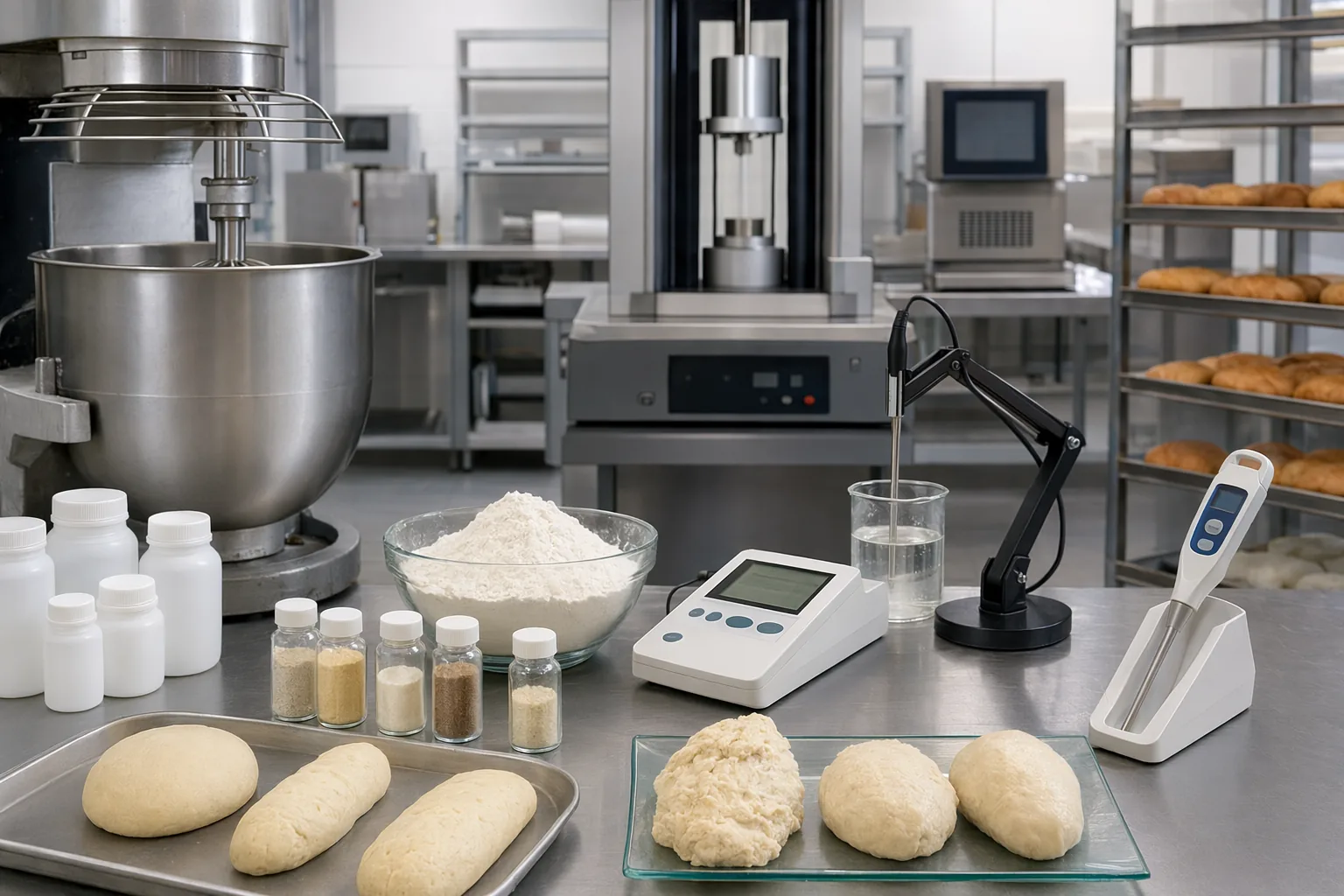
Practical guidance for industrial bakeries evaluating glucose oxidase enzyme performance, from dough strength and tolerance to pilot validation and supplier qualification. Written for bakery manufacturers, flour mills and ingredient distributors buying glucose oxidase in bulk; grades and volumes are quoted per order.
Why Glucose Oxidase Behaves Differently in Baking Lines
Glucose oxidase, often called the GOx enzyme, is used in baking to improve dough handling, tolerance, and structure. In dough, the glucose oxidase enzyme catalyzes glucose oxidation in the presence of oxygen, producing gluconic acid and hydrogen peroxide. The peroxide can contribute to oxidative strengthening of the gluten network, but the effect depends on the flour system and process. If the dough becomes too tight, tears during make-up, or loses oven spring, the cause may be overdose, insufficient reduction balance, low available moisture, or excessive mixing energy. If the effect is weak, look first at enzyme activity, dough pH, oxygen incorporation, glucose availability, and storage condition of the enzyme blend. For industrial bakeries, the goal is not maximum oxidation of glucose, but a repeatable strength profile that improves machinability without reducing volume or crumb softness.
Primary use: dough strengthening and processing tolerance • Key reaction inputs: glucose and oxygen • Key reaction outputs: gluconic acid and hydrogen peroxide • Common risk: over-tight dough from excessive oxidative effect
Starting Dosage Bands and Adjustment Logic
Because activity units and carriers differ by supplier, glucose oxidase baking dosage should be set by enzyme activity, not only by grams per metric ton of flour. As a practical trial range, many bakeries screen approximately 5 to 100 ppm of commercial enzyme preparation on flour weight, then narrow the range in pilot baking. High-strength flour, long fermentation, frozen dough, and high-speed lines may respond differently from soft flour or short-process bread. Start at the low end, run a control, and evaluate dough development time, extensibility, stickiness, proof stability, loaf volume, crumb grain, and sliceability. Increase dosage only when the current level shows a measurable benefit without tightening the dough excessively. If blends include ascorbic acid, lipase, xylanase, or emulsifiers, adjust one variable at a time to avoid assigning the wrong effect to glucose oxidase.
Screen low, medium, and high doses against a no-enzyme control • Dose by declared activity and validate by baking performance • Avoid changing oxidants, emulsifiers, and GOx simultaneously • Track both process handling and finished-product quality
pH, Temperature, and Process Conditions to Check
Most commercial fungal glucose oxidase products used for food processing show useful activity in mildly acidic dough systems, commonly around pH 4.5 to 6.5, with many bread doughs falling near pH 5.0 to 6.2. Temperature response depends on enzyme source and formulation, but practical activity is usually relevant during mixing, floor time, and early proofing, often around 20 to 45°C. Activity may decline as temperature rises during baking, and thermal inactivation is expected as the product heats. Troubleshooting should include actual dough temperature, not only room temperature. If dough is cold, dry, low in fermentable sugars, or mixed with limited oxygen incorporation, the reaction may be slower. If dough is warm, highly aerated, and sugar-rich, the same dose can feel stronger. Always verify recommended pH and temperature ranges on the supplier TDS.
Typical dough pH check: about 5.0 to 6.2 • Typical process activity window: mixing through early proof • Confirm product-specific optimum pH and temperature on the TDS • Measure final dough temperature during every trial
QC Tests for a Reliable Glucose Oxidase Assay and Bake Trial
A glucose oxidase assay can confirm incoming enzyme activity, but bakery acceptance should be based on both analytical and functional checks. Ask the supplier which substrate, pH, temperature, and unit definition are used, because activity values are not always interchangeable across methods. For plant trials, combine the COA review with dough rheology and bake data. Useful QC tools include farinograph or mixograph water absorption and development time, extensograph or alveograph strength and extensibility, dough pH, proof height, loaf volume, crumb image analysis, texture over shelf life, and sensory checks for dryness or chew. Record flour lot, formula, mixer speed, dough temperature, proof conditions, and bake profile. If performance drifts, investigate enzyme storage, dosing accuracy, flour enzyme background, oxidant carryover, and micro-ingredient premix uniformity before changing supplier.
Compare assay method and unit definition between suppliers • Use rheology plus bake results, not assay alone • Document flour lot and dosing accuracy • Retain trial samples and batch records for repeatability
Supplier Qualification, Documentation, and Cost-in-Use
For B2B procurement, supplier qualification should include more than price per kilogram. Request a current COA, TDS, and SDS for every glucose oxidase product under review. The COA should identify activity, batch number, manufacturing or release date, and agreed quality parameters. The TDS should state recommended applications, dosage guidance, handling, storage, shelf life, carrier information where disclosed, and process limitations. The SDS should support safe handling by operators and warehouse teams. Compare cost-in-use by calculating the dose required to achieve the same dough effect, not the lowest purchase price. A concentrated product may be cheaper in use, while a diluted premix may improve dosing accuracy. Before approval, run pilot validation under real flour lots, production mixing energy, proofing time, and packaging conditions.
Review COA, TDS, and SDS before plant trials • Calculate cost per metric ton of flour treated • Validate under real production conditions • Assess technical support, lead time, and batch consistency
Technical Buying Checklist
Buyer Questions
A practical pilot screen is often about 5 to 100 ppm of commercial glucose oxidase preparation on flour weight, but the correct dose depends on declared activity, flour strength, formula, mixing energy, and fermentation time. Start low, compare against a no-enzyme control, and increase only when dough handling, proof stability, loaf volume, and crumb quality improve without excessive tightening.
Over-tight dough usually indicates too much oxidative effect for the flour and process. Possible causes include excessive GOx dosage, strong flour, high oxygen incorporation during mixing, warm dough, interaction with ascorbic acid or other oxidants, or reduced dough hydration. Reduce the dose, review the full oxidant system, and run rheology plus bake trials before changing the enzyme supplier.
Yes. Glucose oxidase activity is pH-dependent, and many commercial products used in baking function best in mildly acidic systems. Bread dough commonly falls near pH 5.0 to 6.2, but the supplier’s TDS should be used for the specific activity range. If pH shifts due to sourdough, acids, preservatives, or fermentation, the same dosage may perform differently.
Compare suppliers by activity method, COA consistency, TDS clarity, SDS availability, storage stability, technical support, lead time, and cost-in-use at equivalent baking performance. Do not compare price per kilogram alone. Run the same flour lot, formula, process conditions, and QC measurements for both products, then calculate cost per metric ton of flour at the dose that meets your specification.
Glucose Oxidase for Research & Industry
Need Glucose Oxidase for your lab or production process?
ISO 9001 certified · Food-grade & research-grade · Ships to 80+ countries
Frequently Asked Questions
What is the best starting dose for glucose oxidase in bread?
A practical pilot screen is often about 5 to 100 ppm of commercial glucose oxidase preparation on flour weight, but the correct dose depends on declared activity, flour strength, formula, mixing energy, and fermentation time. Start low, compare against a no-enzyme control, and increase only when dough handling, proof stability, loaf volume, and crumb quality improve without excessive tightening.
Why did glucose oxidase make our dough too tight?
Over-tight dough usually indicates too much oxidative effect for the flour and process. Possible causes include excessive GOx dosage, strong flour, high oxygen incorporation during mixing, warm dough, interaction with ascorbic acid or other oxidants, or reduced dough hydration. Reduce the dose, review the full oxidant system, and run rheology plus bake trials before changing the enzyme supplier.
Does pH affect glucose oxidase performance in baking?
Yes. Glucose oxidase activity is pH-dependent, and many commercial products used in baking function best in mildly acidic systems. Bread dough commonly falls near pH 5.0 to 6.2, but the supplier’s TDS should be used for the specific activity range. If pH shifts due to sourdough, acids, preservatives, or fermentation, the same dosage may perform differently.
How should we compare two glucose oxidase suppliers?
Compare suppliers by activity method, COA consistency, TDS clarity, SDS availability, storage stability, technical support, lead time, and cost-in-use at equivalent baking performance. Do not compare price per kilogram alone. Run the same flour lot, formula, process conditions, and QC measurements for both products, then calculate cost per metric ton of flour at the dose that meets your specification.
Wholesale Glucose Oxidase: Request a Quote
For manufacturers, distributors and resellers: send the application, the quantity and the destination country for a quote. Turn This Guide Into a Supplier Brief Request a glucose oxidase baking evaluation with COA/TDS/SDS review, pilot dosage design, and cost-in-use comparison. See our application page for Glucose Oxidase Method Reagent for Oxidation Control at /applications/glucose-oxidase-method-peroxidase/ for specs, MOQ, and a free 50 g sample.
Contact Us to Contributehello@mail.enzymefocus.com