Glucose Oxidase Sigma: Using Glucose Oxidase in Baking Formulations
Practical B2B guide to glucose oxidase dosing, process conditions, QC, supplier qualification, and cost-in-use for bakery formulations.
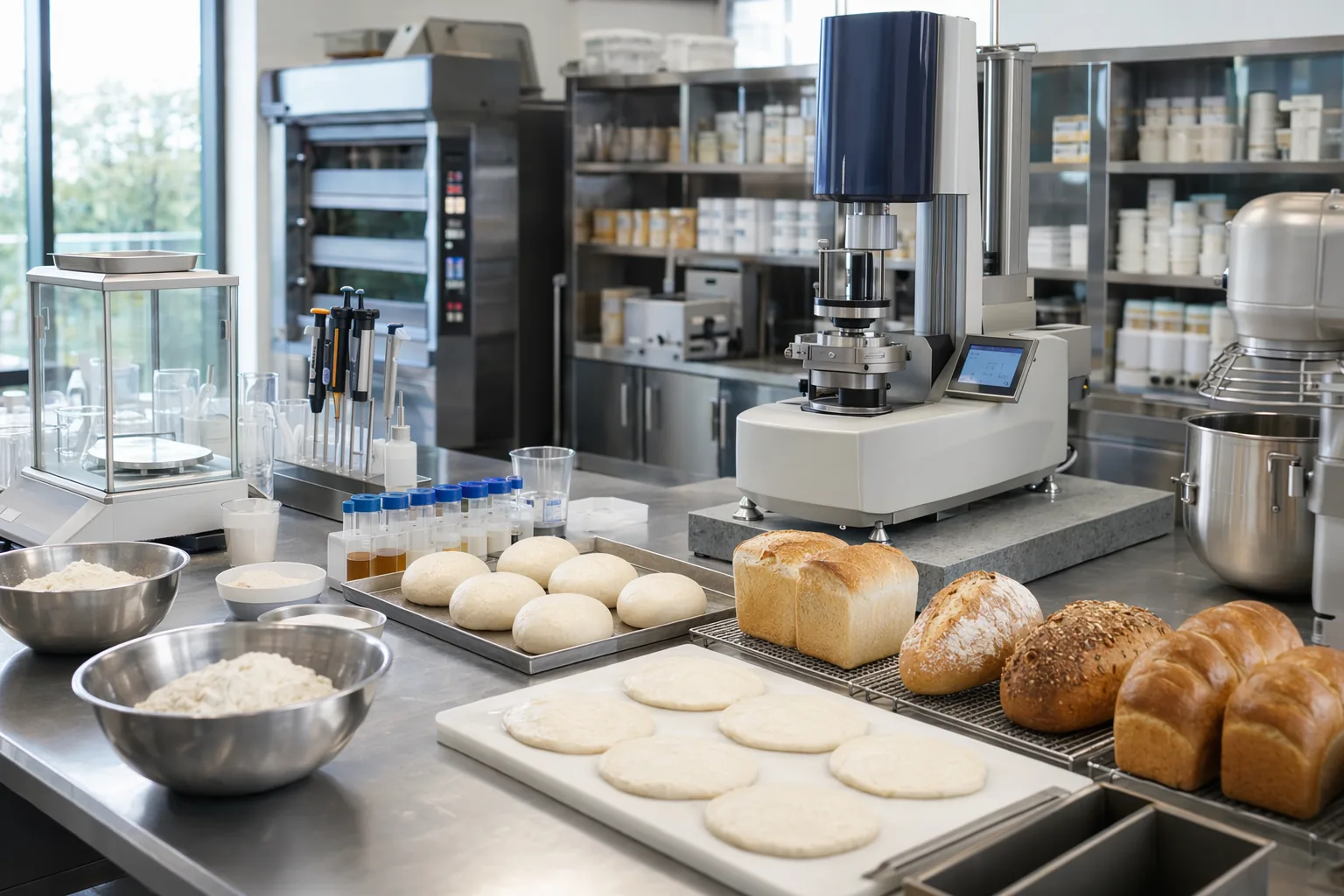
For industrial bakeries, glucose oxidase can strengthen dough handling and improve process tolerance when dosage, flour quality, and validation controls are aligned.
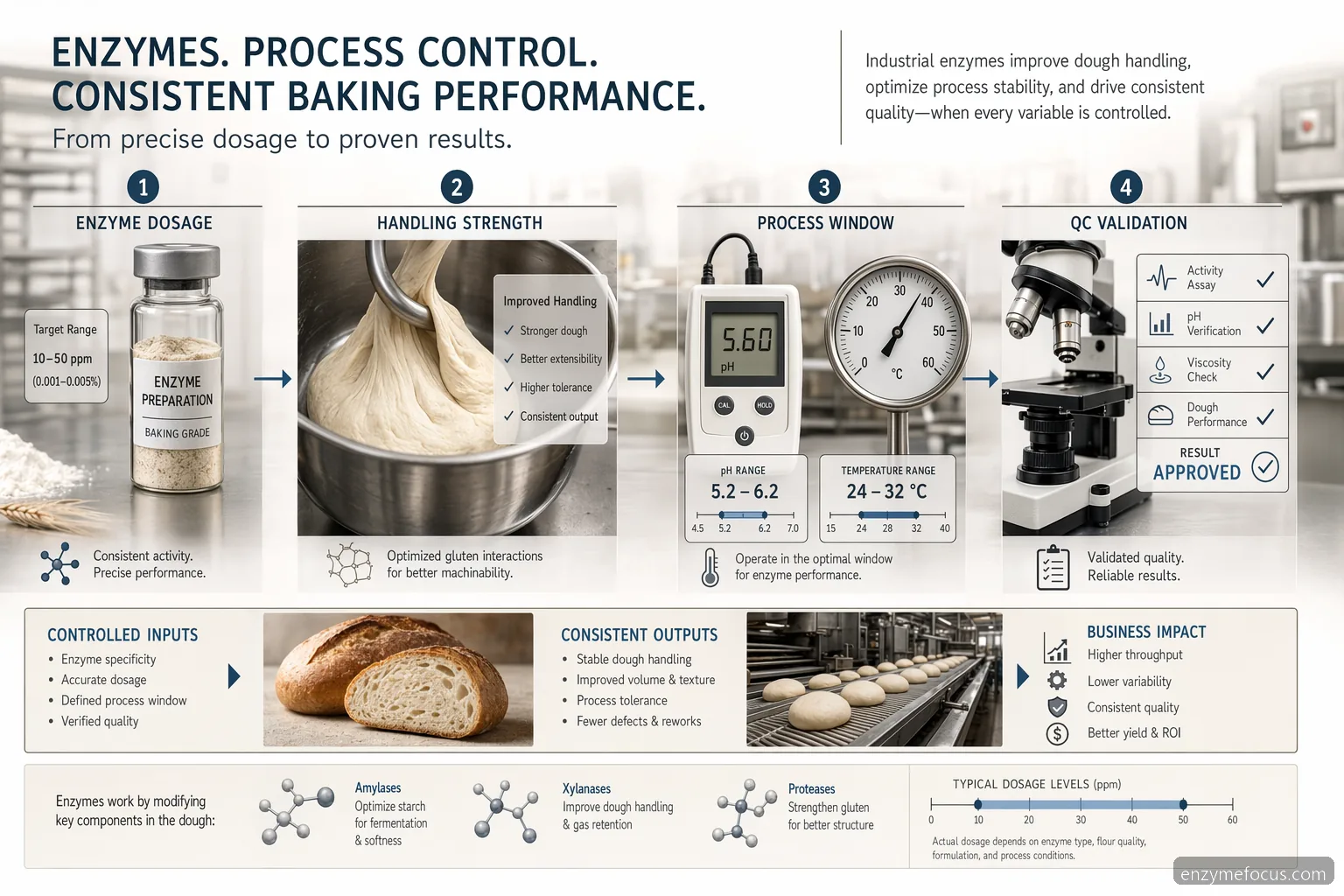
Why Buyers Search for Glucose Oxidase Sigma
Industrial buyers often search for "glucose oxidase sigma" when they need a reference-grade concept, activity benchmark, or formulation starting point. For commercial baking, however, the key decision is not a laboratory label; it is whether the glucose oxidase enzyme matches your flour system, process window, regulatory market, and cost target. Glucose oxidase catalyzes glucose oxidation in the presence of oxygen, forming gluconolactone, which hydrolyzes to gluconic acid, and hydrogen peroxide. In dough, the peroxide can promote oxidative cross-linking in gluten and related components, improving dough strength and machinability when correctly dosed. Overuse can create tight dough, reduced expansion, or processing variability. Treat the GOx enzyme as a functional processing aid that must be validated under your line conditions rather than a one-size-fits-all additive.
Primary use: dough strengthening and tolerance • Main reaction: glucose oxidized with oxygen to peroxide and gluconolactone • Best fit: bread, buns, rolls, laminated systems, and flour correction trials
How Glucose Oxidase Works in Dough
In baking, glucose glucose oxidase interactions depend on available glucose, oxygen incorporation during mixing, water activity, pH, and the enzyme preparation’s activity. The oxidation of glucose is not the same as cellular metabolism. Unlike biology classes that ask, "in glycolysis for each molecule of glucose oxidized to pyruvate," bakers are focused on controlled peroxide generation and its effects on dough structure. In typical wheat dough, the glucose oxidase reaction is most useful during mixing and early fermentation, before heat denatures the enzyme. Many commercial preparations perform across approximately pH 4.0 to 7.0, with practical dough temperatures often near 20 to 35°C. Activity declines as thermal exposure rises, and baking usually inactivates the enzyme. Performance should be measured in the finished process, because flour ash, protein quality, reducing agents, emulsifiers, and oxidants can shift the response.
Requires glucose and oxygen • Acts before baking heat inactivation • Interacts with ascorbic acid, cysteine, SSL/DATEM systems, and flour quality
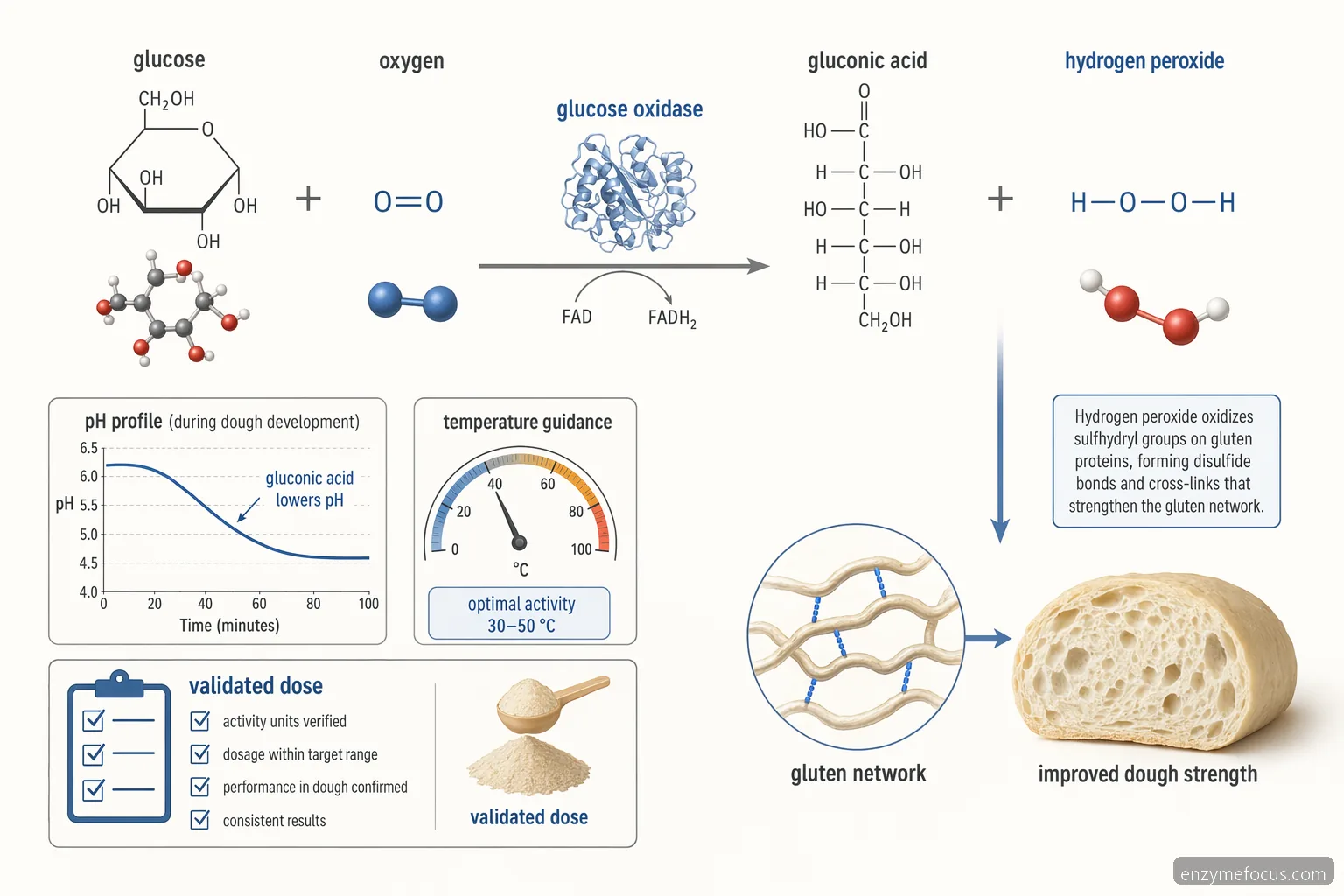
Starting Dosage and Process Conditions
For bakery formulation work, begin with a conservative dosage ladder rather than a single fixed rate. A common pilot range is about 5 to 50 ppm of enzyme preparation on flour weight, but the correct level depends on declared activity units, carrier concentration, flour strength, and target product. Strong flours may need less enzyme; weak or variable flours may show a clearer benefit. Run bench doughs at the plant’s normal absorption, mixing time, dough temperature, fermentation time, and proof humidity. If the enzyme is supplied as a concentrated powder, preblend it with flour or a minor dry ingredient to improve dispersion. If liquid, confirm dilution stability and dosing accuracy. Track whether glucose oxidase baking use improves extensibility balance, gas retention, machinability, and loaf symmetry without making dough bucky or crumb overly tight.
Pilot range: 5 to 50 ppm preparation on flour weight • Typical dough pH: about 4.5 to 6.2 • Typical dough temperature: 20 to 35°C • Confirm dosage by activity units, not only weight
QC Checks for Formulation Validation
Quality control should connect enzyme dosage to measurable bakery outcomes. Start with flour characterization: moisture, protein, ash, falling number, damaged starch, and gluten strength. In dough trials, use farinograph, extensograph, alveograph, mixograph, or texture methods where available. On the line, measure mixing energy, dough temperature, divider performance, proof height, oven spring, loaf volume, crumb grain, sliceability, and shelf-life texture. Include a no-enzyme control and, if relevant, current oxidant or improver systems. Because glucose oxidation produces peroxide as an intermediate functional driver, monitor signs of over-oxidation: short dough, poor expansion, pale crust from altered fermentation, or harsh crumb. Confirm finished-product sensory quality and label requirements for the selling region. A good validation plan compares technical benefit, process robustness, and cost-in-use before approving scale-up.
Use a control and at least three dosage points • Record flour lot and enzyme lot numbers • Measure dough handling and finished bread quality • Repeat trials across more than one flour lot
Supplier Qualification and Cost-in-Use
For B2B procurement, supplier qualification is as important as initial performance. Request a current COA, TDS, and SDS for each glucose oxidase lot or grade under evaluation. The COA should state activity, test method, batch number, manufacturing date, and storage recommendation. The TDS should clarify source organism or production system where applicable, carrier or diluent, pH and temperature guidance, dosage suggestions, solubility, and handling precautions. The SDS should support safe warehouse and production handling. Ask about lot-to-lot variability, lead time, minimum order quantity, packaging, shelf life, allergen position, and change-notification practices. Cost-in-use should be calculated from delivered price, activity strength, dosage, yield impact, waste reduction, and any reformulation savings. Approve the supplier only after pilot validation and a documented production trial under normal operating conditions.
Documents: COA, TDS, SDS • Commercial checks: MOQ, lead time, shelf life, packaging • Technical checks: activity method, dosage basis, storage stability • Approval basis: pilot data plus production-scale confirmation
Technical Buying Checklist
Buyer Questions
No. Glucose oxidase is an enzyme that catalyzes glucose oxidation when oxygen is present, generating hydrogen peroxide in the dough system. Chemical oxidants act through different mechanisms and may have different regulatory or labeling implications. In formulation, compare them by performance, permitted use, process tolerance, sensory impact, and cost-in-use rather than assuming one can replace another directly.
In cellular metabolism, reduced cofactors such as NADH and FADH2 supply electrons for oxidative phosphorylation. That question is different from industrial baking use. With glucose oxidase in dough, the practical reaction products are gluconolactone or gluconic acid and hydrogen peroxide. Bakers use the controlled peroxide effect to influence dough structure, not to support biological energy production.
In glycolysis, glucose is first phosphorylated and then metabolized through a series of enzyme-catalyzed steps, with oxidation occurring later as glyceraldehyde-3-phosphate is converted and NAD+ is reduced. Baking formulation is different. A glucose oxidase enzyme directly catalyzes oxidation of glucose using oxygen, so process factors such as mixing, oxygen incorporation, pH, and temperature matter most.
Compare suppliers using technical documents and plant data. Request COA, TDS, SDS, activity method, allergen position, carrier information, recommended storage, shelf life, lead time, and change-notification practices. Then run identical pilot bakes across dosage points. The preferred supplier should deliver consistent activity, reliable logistics, clear documentation, good dispersion or dosing behavior, and the lowest validated cost-in-use.
Related Search Themes
glucose oxidase, in glycolysis for each molecule of glucose oxidized to pyruvate, glucose oxidized, glucose oxidation, glucose glucose oxidase, oxidation of glucose
Glucose Oxidase for Research & Industry
Need Glucose Oxidase for your lab or production process?
ISO 9001 certified · Food-grade & research-grade · Ships to 80+ countries
Frequently Asked Questions
Is glucose oxidase the same as a chemical oxidant in baking?
No. Glucose oxidase is an enzyme that catalyzes glucose oxidation when oxygen is present, generating hydrogen peroxide in the dough system. Chemical oxidants act through different mechanisms and may have different regulatory or labeling implications. In formulation, compare them by performance, permitted use, process tolerance, sensory impact, and cost-in-use rather than assuming one can replace another directly.
What products of glucose oxidation are essential for oxidative phosphorylation?
In cellular metabolism, reduced cofactors such as NADH and FADH2 supply electrons for oxidative phosphorylation. That question is different from industrial baking use. With glucose oxidase in dough, the practical reaction products are gluconolactone or gluconic acid and hydrogen peroxide. Bakers use the controlled peroxide effect to influence dough structure, not to support biological energy production.
In glycolysis what starts the process of glucose oxidation?
In glycolysis, glucose is first phosphorylated and then metabolized through a series of enzyme-catalyzed steps, with oxidation occurring later as glyceraldehyde-3-phosphate is converted and NAD+ is reduced. Baking formulation is different. A glucose oxidase enzyme directly catalyzes oxidation of glucose using oxygen, so process factors such as mixing, oxygen incorporation, pH, and temperature matter most.
How should an industrial bakery compare glucose oxidase suppliers?
Compare suppliers using technical documents and plant data. Request COA, TDS, SDS, activity method, allergen position, carrier information, recommended storage, shelf life, lead time, and change-notification practices. Then run identical pilot bakes across dosage points. The preferred supplier should deliver consistent activity, reliable logistics, clear documentation, good dispersion or dosing behavior, and the lowest validated cost-in-use.
Related: Glucose Oxidase Method Reagent for Oxidation Control
Turn This Guide Into a Supplier Brief Request glucose oxidase formulation support, documentation review, and pilot-trial guidance for your bakery process. See our application page for Glucose Oxidase Method Reagent for Oxidation Control at /applications/glucose-oxidase-method-peroxidase/ for specs, MOQ, and a free 50 g sample.
Contact Us to Contribute