Glucose Oxidase Sigma Aldrich: Specification Checklist for Baking Buyers
Compare glucose oxidase specs for baking procurement: activity, pH, temperature, COA/TDS/SDS, pilot validation, and cost-in-use.
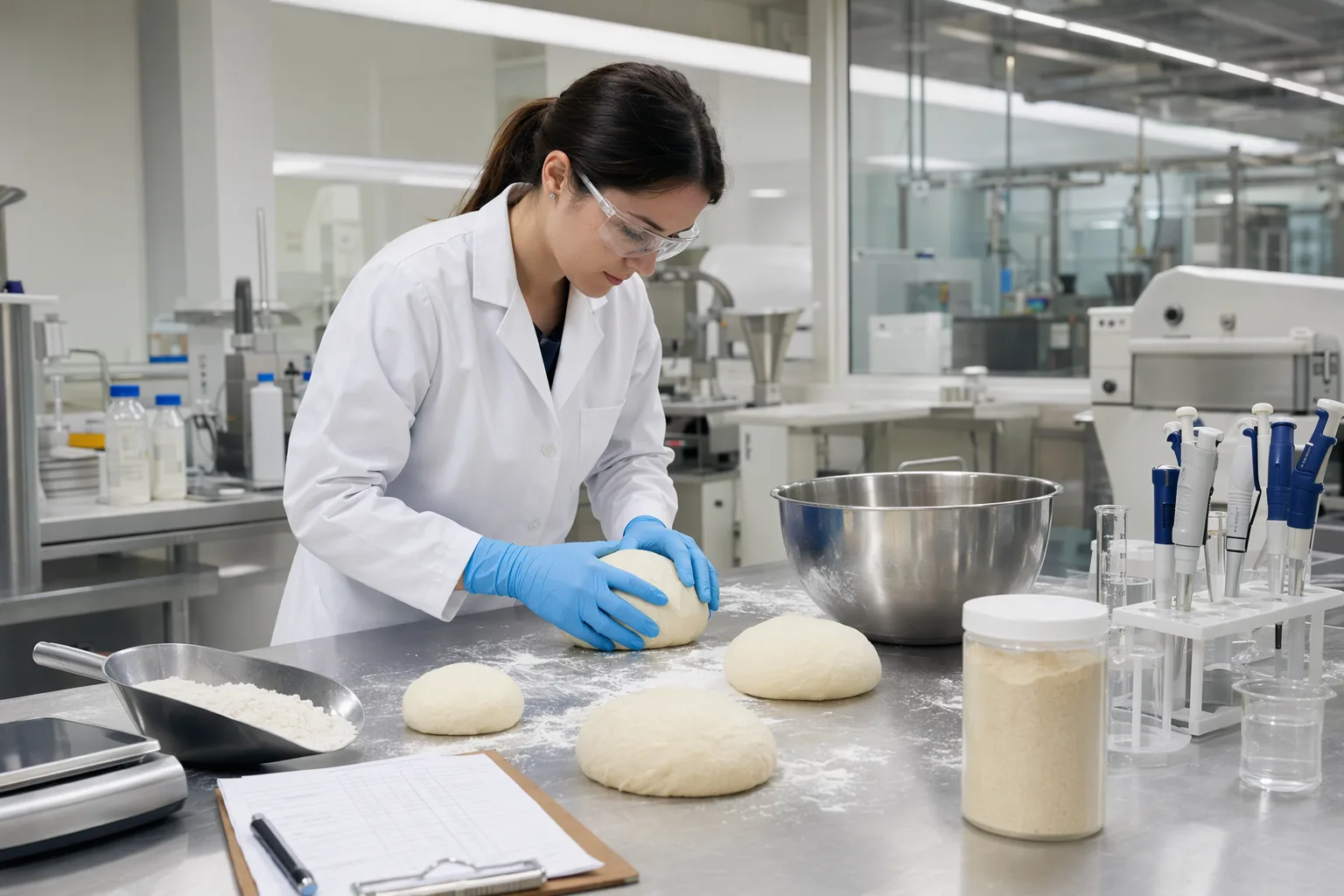
Use this practical checklist to compare reagent-grade glucose oxidase references with industrial baking enzyme offers, then qualify a supplier on performance, documentation, and cost-in-use.
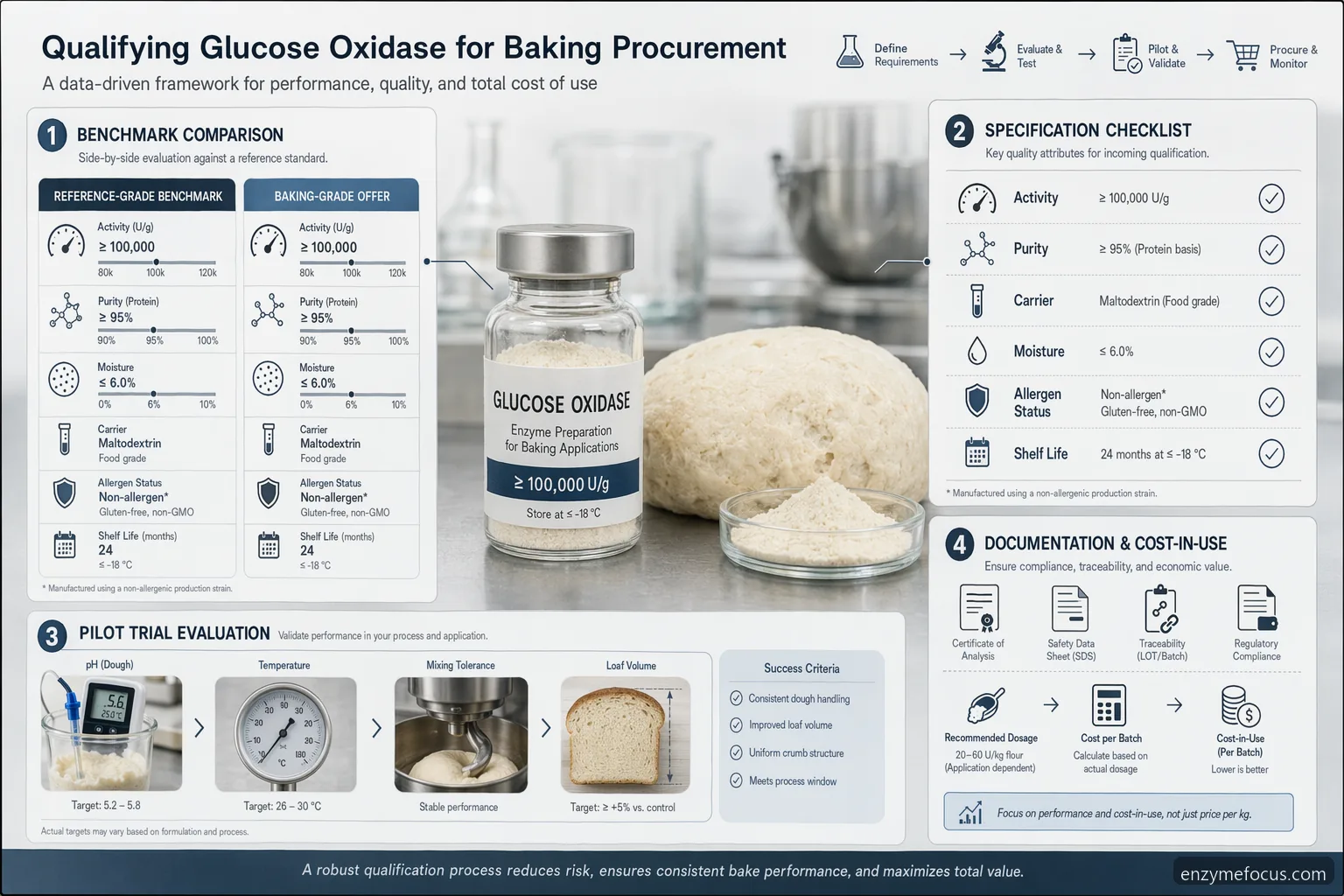
Why compare catalog glucose oxidase with baking-grade offers?
Searches for glucose oxidase sigma aldrich often come from buyers using a laboratory catalog listing as a technical reference before sourcing an industrial baking enzyme. That comparison is useful, but the purchasing criteria are different. Reagent-grade glucose oxidase is commonly selected for analytical consistency, while a baking plant needs repeatable dough functionality, safe food-use documentation, scalable supply, and economical dosing. In dough, glucose glucose oxidase systems convert available glucose and oxygen into gluconic acid or its lactone and hydrogen peroxide, supporting oxidative strengthening of the gluten network. The target is not maximum purity at any cost; it is controlled performance under bakery conditions. A practical comparison should therefore separate analytical identity from production suitability, then verify the GOx enzyme in the user’s flour, formulation, mixer, fermentation time, and oven profile.
Use catalog data as a reference, not a final baking specification. • Prioritize food-process documentation and lot consistency. • Confirm performance in the actual dough system.
Core specification points for glucose oxidase baking use
A baking specification should state enzyme source, activity method, activity per gram or milliliter, carrier or diluent, appearance, moisture, microbiological limits, storage conditions, and shelf life. Many commercial glucose oxidase enzyme preparations are produced by fermentation, often from fungal sources such as Aspergillus niger, but buyers should verify the declared source on the supplier’s TDS and COA rather than assume equivalence from a phrase such as glucose oxidase from aspergillus niger sigma aldrich. Activity units are especially important because one supplier’s unit definition may not match another’s. Ask for the assay pH, temperature, substrate concentration, and calculation method. For baking, typical evaluation windows include dough pH around 5.0–6.5, mixing and proofing temperatures around 20–38°C, and thermal inactivation during baking as crumb temperature rises. Dosage is usually trial-based and must be tied to stated activity.
Check activity unit definition before comparing prices. • Confirm source organism and carrier system. • Review storage temperature and shelf-life limits. • Match specification to flour and process conditions.
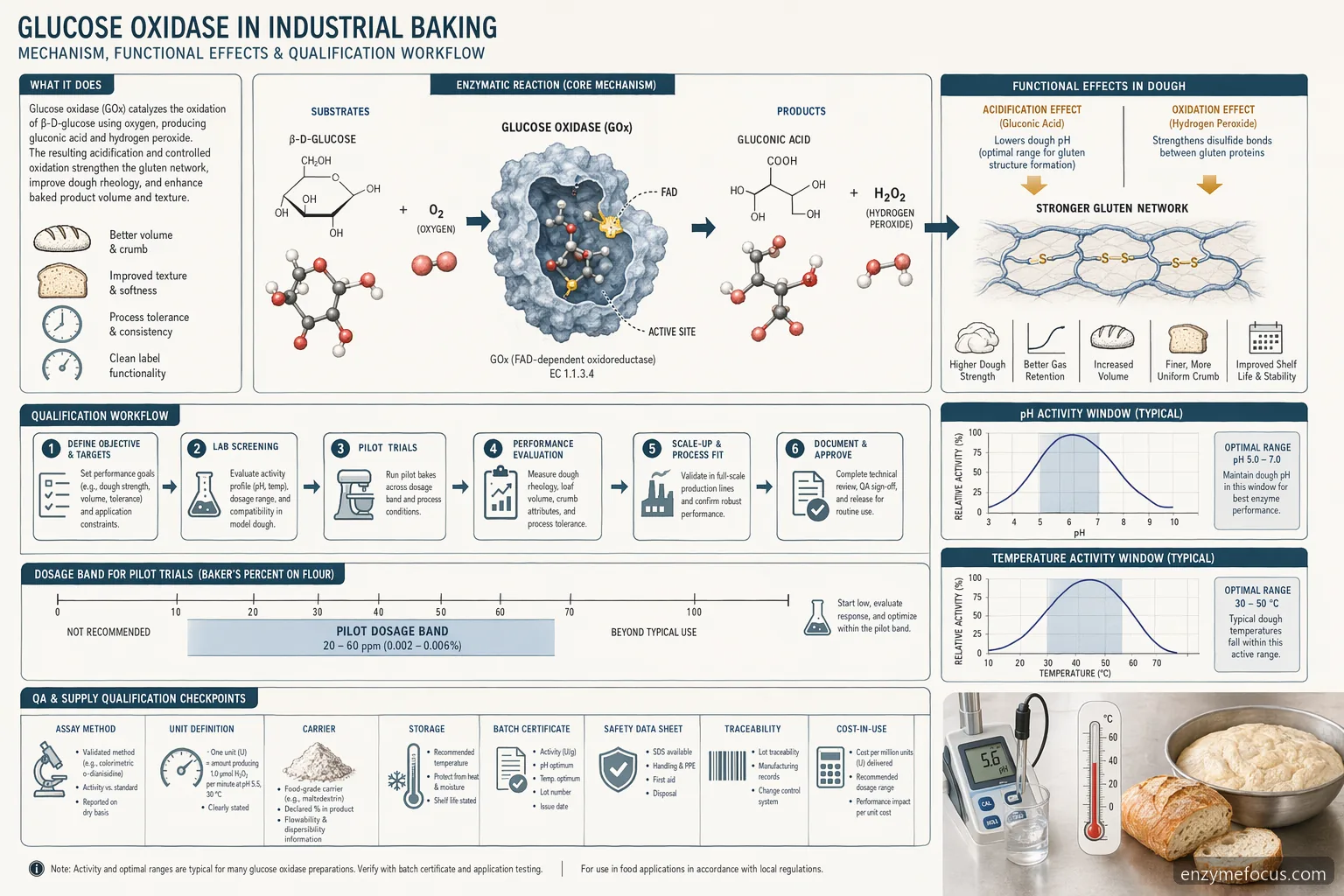
Process conditions and dosage bands for pilot trials
Pilot work should start conservatively because excess glucose oxidase can over-strengthen dough, reduce extensibility, or change handling. A common screening approach is to test several levels across a narrow band, such as 5–50 activity units per kilogram of flour, or an equivalent supplier-recommended addition rate based on the declared activity. Some commercial preparations are dosed by parts per million of product, but that is only meaningful when activity and carrier concentration are known. Run trials at the bakery’s normal absorption, mixing energy, floor time, proof temperature, and yeast level. Measure farinograph, extensograph, or similar rheology if available, then confirm with bake tests. Useful QC checks include dough tolerance, gas retention, loaf volume, crumb grain, crust color, cutting performance, and any flavor shift. Always compare against current oxidants, emulsifiers, or enzyme blends to understand real cost-in-use.
Screen multiple dosage levels, not a single point. • Keep flour lot and process settings constant. • Evaluate rheology and finished bread quality. • Benchmark against the current improver system.
Documentation buyers should request before approval
Before approving glucose oxidase for industrial baking, request a current COA, TDS, and SDS for the exact product and lot. The COA should show activity, appearance, batch number, manufacturing or retest date, and relevant quality tests. The TDS should describe enzyme function, recommended use range, handling guidance, storage, shelf life, and process limitations. The SDS should cover safe handling of enzyme dust or aerosols, which can be sensitizing in occupational settings. Supplier qualification should also include change-control expectations, lot traceability, complaint handling, lead time, packaging format, and minimum order quantity. Avoid assuming that a catalog entry or online listing provides enough information for food manufacturing. For production use, procurement, R&D, quality, and EHS teams should jointly review the supplier package before plant trials.
Require COA, TDS, and SDS for the exact material. • Review allergen, carrier, and handling information. • Confirm traceability and change-control communication. • Include EHS in enzyme handling approval.
How to interpret glucose oxidation terms in procurement
Buyers often encounter general biochemistry phrases while researching glucose oxidase, including glucose oxidized, glucose oxidation, oxidation of glucose, in glycolysis for each molecule of glucose oxidized to pyruvate, and what products of glucose oxidation are essential for oxidative phosphorylation. These terms are not interchangeable in a baking specification. Glycolysis and oxidative phosphorylation describe cellular energy pathways, while glucose oxidase in dough catalyzes aerobic oxidation of beta-D-glucose to glucono-delta-lactone, which hydrolyzes to gluconic acid, with hydrogen peroxide formation. In baking, the relevant question is how this reaction affects dough strength, oxygen consumption, pH shift, and interaction with flour components. Do not purchase on biochemical wording alone. Translate the chemistry into measurable bakery outcomes: mixing tolerance, proof stability, loaf volume, crumb resilience, and consistency over the intended shelf life of the enzyme preparation.
Separate cell metabolism terms from dough functionality. • Focus on measurable bakery performance. • Track oxygen availability and formulation interactions. • Confirm that reaction effects are beneficial at scale.
Cost-in-use and supplier qualification checklist
The lowest price per kilogram is rarely the best comparison for glucose oxidase baking applications. Calculate cost-in-use from delivered price, activity concentration, recommended dosage, yield impact, waste reduction, replacement of chemical oxidants, and operational reliability. A concentrated enzyme with better lot consistency may cost more per kilogram but less per ton of flour if the required dosage is lower. Supplier qualification should test technical support quality as well as paperwork. Ask whether the supplier can help interpret pilot data, recommend dosage adjustments, and support scale-up without making unverifiable performance claims. Confirm packaging compatibility with your dosing system, whether powder dust control or liquid metering is required, and how the material should be stored after opening. Final approval should be based on validated performance in your process, acceptable documentation, dependable supply, and a transparent commercial model.
Compare cost per ton of flour, not only price per kilogram. • Include yield, waste, and process stability in the model. • Assess supplier support during scale-up. • Verify packaging and storage fit plant operations.
Technical Buying Checklist
Buyer Questions
No. A laboratory listing can help buyers understand identity, source, and assay style, but it is not a complete production specification. Bakery purchasing needs food-process documentation, scalable packaging, lot traceability, plant handling guidance, and validated dough performance. Use the listing as a reference point, then request COA, TDS, SDS, dosage guidance, and samples from any supplier being considered for production.
Glucose oxidase catalyzes the oxidation of glucose in the presence of oxygen, forming gluconolactone or gluconic acid and hydrogen peroxide. In dough, this can support oxidative strengthening and improve handling tolerance when correctly dosed. The effect depends on flour quality, water absorption, oxygen availability, mixing energy, fermentation time, and other improver ingredients, so pilot validation is essential.
Most baking evaluations should focus on the real dough environment rather than only the enzyme’s lab optimum. Check performance around dough pH 5.0–6.5 and process temperatures commonly seen in mixing and proofing, about 20–38°C. Also confirm that the enzyme is inactivated during baking as internal crumb temperatures rise, because residual activity is not normally the desired endpoint.
Do not compare dosage by grams of product alone. First compare declared activity units, assay conditions, carrier concentration, and recommended use range. Then run side-by-side trials at equivalent functional levels in the same flour and formula. The best commercial comparison is cost-in-use per ton of flour or finished product, supported by loaf quality and process stability data.
Request a COA, TDS, and SDS for the exact glucose oxidase product under review. The COA should document lot-specific activity and quality data. The TDS should explain use, dosage, storage, and limitations. The SDS should guide safe handling, especially for enzyme powders or aerosols. Also request supplier information on traceability, change control, lead time, and packaging.
Related Search Themes
glucose oxidase, in glycolysis for each molecule of glucose oxidized to pyruvate, glucose oxidized, glucose oxidation, glucose glucose oxidase, oxidation of glucose
Glucose Oxidase for Research & Industry
Need Glucose Oxidase for your lab or production process?
ISO 9001 certified · Food-grade & research-grade · Ships to 80+ countries
Frequently Asked Questions
Is a laboratory glucose oxidase listing enough for bakery purchasing?
No. A laboratory listing can help buyers understand identity, source, and assay style, but it is not a complete production specification. Bakery purchasing needs food-process documentation, scalable packaging, lot traceability, plant handling guidance, and validated dough performance. Use the listing as a reference point, then request COA, TDS, SDS, dosage guidance, and samples from any supplier being considered for production.
What does glucose oxidase do in bread dough?
Glucose oxidase catalyzes the oxidation of glucose in the presence of oxygen, forming gluconolactone or gluconic acid and hydrogen peroxide. In dough, this can support oxidative strengthening and improve handling tolerance when correctly dosed. The effect depends on flour quality, water absorption, oxygen availability, mixing energy, fermentation time, and other improver ingredients, so pilot validation is essential.
What pH and temperature should be checked for baking trials?
Most baking evaluations should focus on the real dough environment rather than only the enzyme’s lab optimum. Check performance around dough pH 5.0–6.5 and process temperatures commonly seen in mixing and proofing, about 20–38°C. Also confirm that the enzyme is inactivated during baking as internal crumb temperatures rise, because residual activity is not normally the desired endpoint.
How should dosage be compared between suppliers?
Do not compare dosage by grams of product alone. First compare declared activity units, assay conditions, carrier concentration, and recommended use range. Then run side-by-side trials at equivalent functional levels in the same flour and formula. The best commercial comparison is cost-in-use per ton of flour or finished product, supported by loaf quality and process stability data.
What documents should a B2B buyer request before approval?
Request a COA, TDS, and SDS for the exact glucose oxidase product under review. The COA should document lot-specific activity and quality data. The TDS should explain use, dosage, storage, and limitations. The SDS should guide safe handling, especially for enzyme powders or aerosols. Also request supplier information on traceability, change control, lead time, and packaging.
Related: Glucose Oxidase Method Reagent for Oxidation Control
Turn This Guide Into a Supplier Brief Request a baking-grade glucose oxidase specification review and pilot trial plan for your flour system. See our application page for Glucose Oxidase Method Reagent for Oxidation Control at /applications/glucose-oxidase-method-peroxidase/ for specs, MOQ, and a free 50 g sample.
Contact Us to Contribute