Aspergillus Niger Glucose Oxidase: Dosage, pH, and Temperature in Baking
Troubleshoot Aspergillus niger glucose oxidase dosage, pH, temperature, QC, and supplier checks for industrial baking.
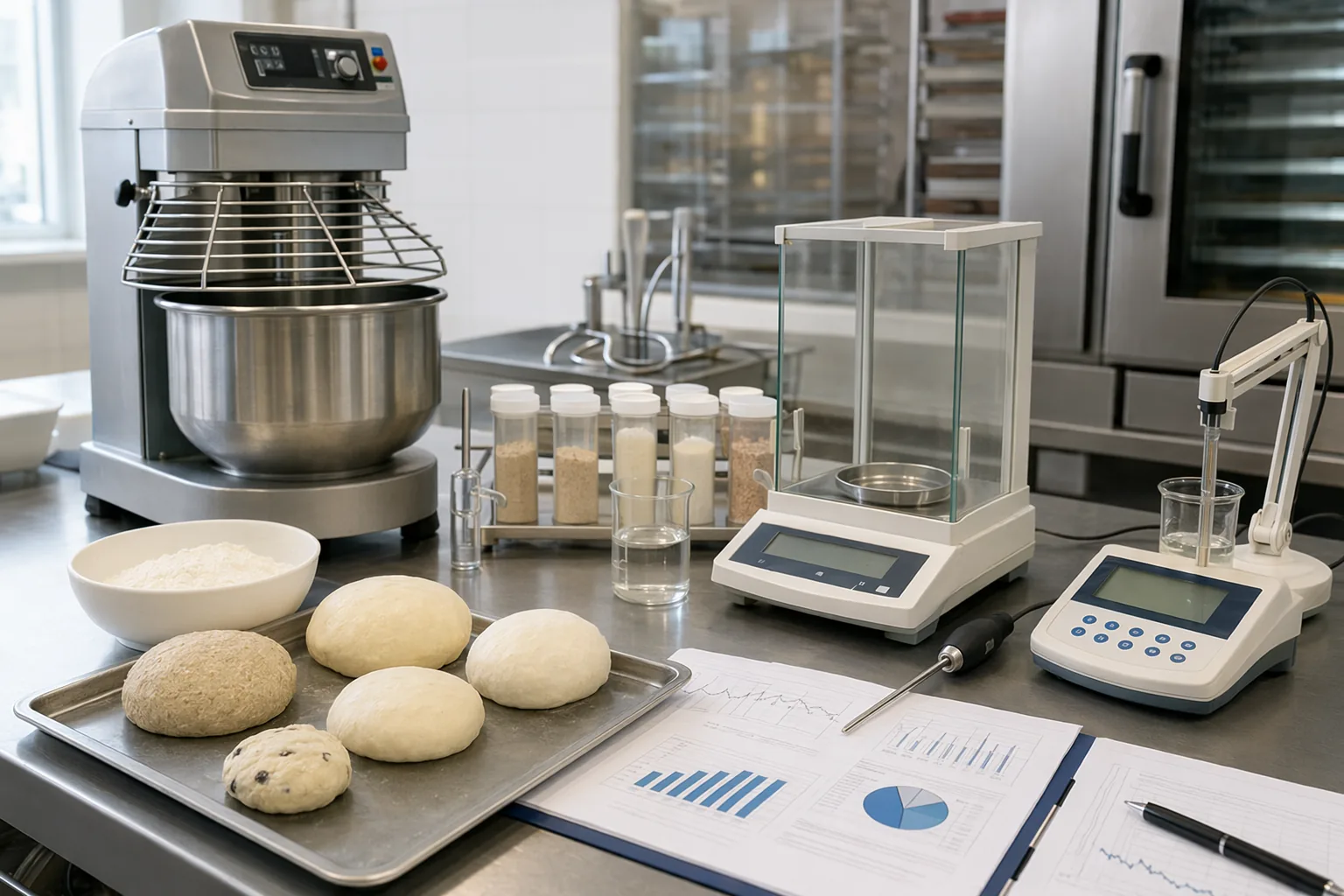
A practical B2B guide for bakeries and ingredient buyers optimizing glucose oxidase performance in dough systems without over-oxidation or inconsistent volume. Written for bakery manufacturers, flour mills and ingredient distributors buying glucose oxidase in bulk; grades and volumes are quoted per order.
How glucose oxidase works in dough
Aspergillus niger glucose oxidase is a fungal glucose oxidase enzyme used in commercial baking to improve dough strength, handling tolerance, and gas retention. The GOx enzyme catalyzes the oxidation of glucose using oxygen, forming glucono-delta-lactone and hydrogen peroxide; the lactone then hydrolyzes to gluconic acid. In dough, controlled hydrogen peroxide formation promotes oxidative cross-linking in the gluten network, especially through sulfhydryl-to-disulfide conversion. This can reduce stickiness, increase machinability, and improve loaf symmetry when dosage is appropriate. For procurement, specify glucose oxidase from Aspergillus niger by activity, carrier, particle form, and intended food application rather than by generic enzyme name alone.
Substrate: beta-D-glucose naturally present in flour and generated by amylases. • Co-substrate: oxygen incorporated during mixing and makeup. • Key functional intermediate: hydrogen peroxide at controlled levels. • Main process risk: over-oxidation causing tight dough and reduced expansion.
Dosage troubleshooting for industrial baking
Glucose oxidase dosage should be set by declared enzyme activity, not only by grams of product, because commercial formulations vary in concentration and carrier. As a screening range, many bakeries start pilot work around 10 to 50 GOx units per kilogram of flour, then evaluate a wider 5 to 200 units per kilogram band if flour strength, formula oxidation demand, or processing stress requires it. If the supplier reports proprietary activity units, request a conversion method or run side-by-side trials using a fixed flour lot. Under-dosing may show as sticky dough, weak sidewalls, poor pan flow control, or low tolerance after proofing. Over-dosing may create dry-feeling, short, elastic dough, reduced oven spring, tight crumb, or pale crust if fermentation balance is affected. When specifying glucose glucose oxidase in internal purchasing records, correct the wording to glucose oxidase to avoid duplicate-name confusion across COA, TDS, and inventory systems.
Pilot at three to five dosage points, including a no-enzyme control. • Hold flour lot, water absorption, mixing energy, yeast, and proof conditions constant. • Record dough stickiness, extensibility, resistance, proof height, and loaf volume. • Calculate cost-in-use per metric ton of flour, not only price per kilogram.
pH, temperature, oxygen, and processing conditions
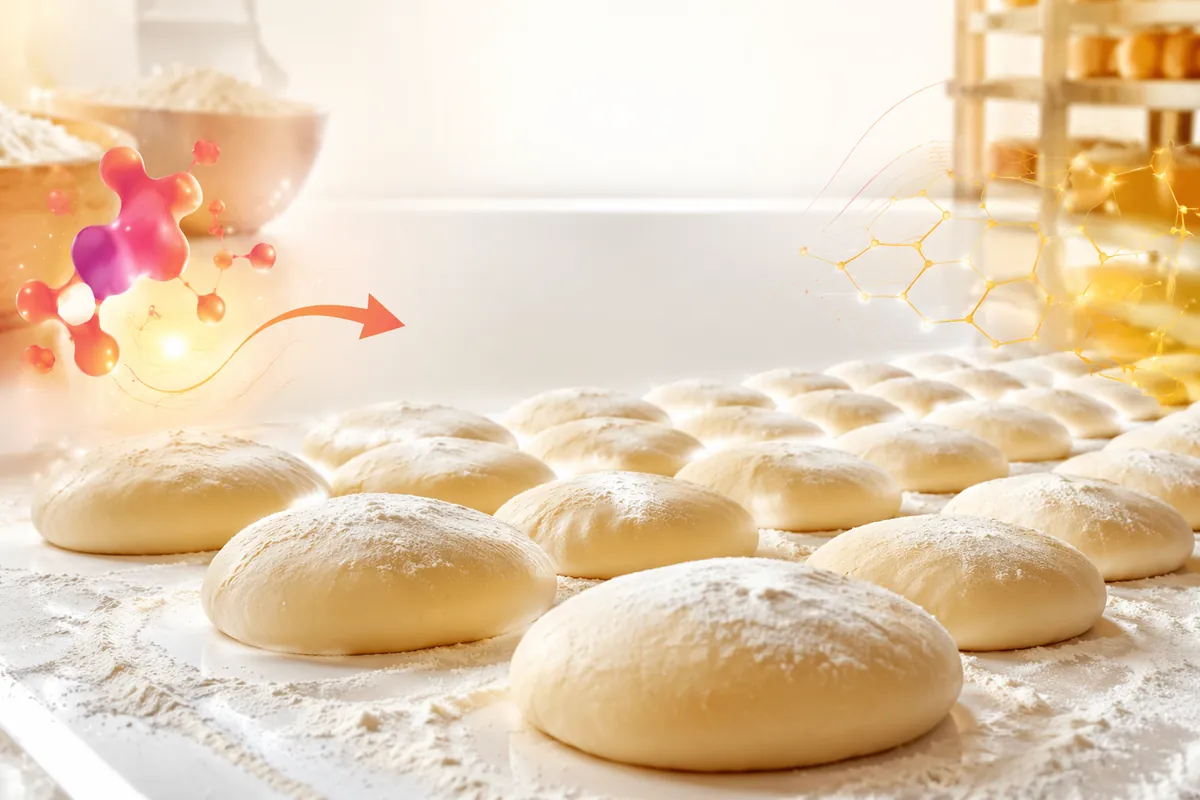
Aspergillus niger glucose oxidase generally performs well in mildly acidic to near-neutral dough systems, with practical baking performance often evaluated around pH 4.5 to 6.5. Many products show strongest activity near pH 5.0 to 6.0, but always confirm the supplier TDS because formulation and assay conditions differ. Dough temperatures of 20 to 32 degrees Celsius are common for bread and roll production; enzyme reaction rate rises with temperature, but dough rheology, yeast activity, and floor time must be balanced. The enzyme is progressively denatured during baking, commonly losing functional activity as crumb temperatures move above approximately 60 to 70 degrees Celsius. Oxygen availability is often overlooked: insufficient mixing aeration can limit glucose oxidized by the enzyme, while excessive oxidation pressure can tighten the dough. Review mixer type, mixing time, headspace, ascorbic acid use, and other oxidants before increasing the enzyme dose.
Typical dough pH evaluation window: 4.5 to 6.5. • Typical dough temperature window: 20 to 32 degrees Celsius. • Avoid assuming higher dosage can compensate for poor oxygen incorporation. • Check interactions with ascorbic acid, bromate alternatives, emulsifiers, and reducing agents.
QC checks and pilot validation
A reliable glucose oxidase baking program needs measurable quality checks from bench to plant scale. At receiving, compare each batch COA against purchase specifications for activity, appearance, moisture or loss on drying where provided, microbial limits, heavy metals if declared, and shelf-life. The TDS should state recommended application, storage, solubility or dispersion guidance, activity assay basis, and handling limits. The SDS should cover dust exposure, respiratory sensitization precautions, PPE, spill response, and safe handling. In the pilot bakery, measure farinograph or mixograph response, extensograph or alveograph behavior where available, dough pH, proof stability, bake loss, loaf volume, crumb firmness, cell structure, and sensory neutrality. Because glucose oxidase affects dough through the oxidation of glucose and oxygen-dependent peroxide formation, validate at actual mixer load, production temperature, and line speed before finalizing procurement. Plant trials should include at least one full production run and retained samples across shelf life.
Use activity-normalized comparison among suppliers. • Retain batch samples for dispute resolution and trend analysis. • Track performance against flour protein, damaged starch, and falling number. • Confirm no negative impact on flavor, crust color, or slicability.
Supplier qualification and cost-in-use
For B2B buyers, the best glucose oxidase supplier is not simply the lowest quoted price. Qualification should confirm manufacturing consistency, technical documentation, batch traceability, lead time reliability, packaging suitability, and responsiveness during troubleshooting. Request COA, TDS, SDS, allergen and GMO status statements if required by your customer program, country-specific regulatory support, and recommended storage conditions. Ask whether the enzyme is supplied as a powder, granule, or liquid, because dust control, dosing accuracy, and blending uniformity affect plant performance. Compare cost-in-use by calculating the dose needed to hit the same dough tolerance and finished-product quality, not the unit price alone. A lower-activity material may be economical if it disperses better or provides consistent results; a higher-activity product may reduce handling but increase overdose risk. For diversified processors, note that glucose oxidase also has roles in food preservation and diagnostics, but baking qualification must be application-specific.
Qualify at least two suppliers for supply security when possible. • Check packaging integrity after warehouse temperature and humidity exposure. • Require clear activity units and assay reference conditions. • Review technical support availability for flour or formula changes.
Food-processing grade versus lab reagent grade
Searches for glucose oxidase from Aspergillus niger, or for catalog grade names such as Type VII, often lead to laboratory reagent material rather than an industrial baking ingredient. Before purchase, confirm whether the material offered is industrial food-processing grade, lab reagent grade, or another format, because grade and intended use can differ significantly. Request a current COA, TDS and SDS for the specific product code under evaluation. The COA should state enzyme activity, activity method, manufacturing or retest date, microbiological limits, heavy metal limits where applicable, and physical appearance. The TDS should explain recommended storage, dispersion guidance, carrier system, dosage guidance and application notes for baking. The SDS supports safe handling, dust control, PPE planning and warehouse training.
Confirm activity units and test method before comparing quotations • Check carrier compatibility with flour improvers and premixes • Confirm pack sizes for pilot, scale-up and routine production • Verify shelf life, storage temperature and packaging format
Technical Buying Checklist
Use this list before you request samples or a quote.
Grade: industrial food-processing grade, not lab reagent grade, specified by activity, carrier and form (powder, granule or liquid). • Activity basis: activity units and assay reference conditions on the TDS; if units are proprietary, a conversion method or side-by-side trials on a fixed flour lot. • Dosage: screening around 10 to 50 GOx units per kilogram of flour, widened to 5 to 200 only if flour strength or process stress requires it, at three to five points plus a no-enzyme control. • Conditions: dough pH 4.5 to 6.5 and dough temperature 20 to 32 degrees Celsius; review mixing aeration, ascorbic acid and other oxidants before raising the dose. • COA per batch: activity, appearance, moisture or loss on drying, microbial limits, heavy metals if declared, shelf life. • Cost-in-use per metric ton of flour, retained batch samples, and a second qualified supplier where possible.
For a wholesale quote, send the grade and form, the quantity per order or per year and the destination country; volumes and freight are quoted per order.
Buyer Questions
Aspergillus niger glucose oxidase is used to strengthen dough by generating controlled hydrogen peroxide during glucose oxidation. This supports gluten network development, improves handling, and can increase tolerance during mixing, proofing, and makeup. It is especially useful when flour quality varies or when automated lines need less sticky dough. The result depends on dosage, oxygen availability, formula balance, and processing conditions.
Over-dosed glucose oxidase may create dough that feels tight, dry, short, or overly elastic. Finished bread can show reduced oven spring, restricted expansion, dense crumb, or lower volume. Because other oxidants and mixing intensity can create similar symptoms, troubleshoot by running a no-enzyme control, reducing the GOx dose stepwise, and checking ascorbic acid, emulsifier, water absorption, and mixing energy.
Compare suppliers by activity-normalized performance, not only by price per kilogram. Request COA, TDS, SDS, batch traceability, recommended storage, shelf-life, and application guidance. Run the same flour, formula, mixer, and proofing conditions across all samples. Then compare dough handling, loaf volume, crumb structure, shelf-life targets, dosing accuracy, packaging fit, technical support, lead time, and cost-in-use.
Not automatically. Glucose oxidase can reduce reliance on some oxidation systems, but it should be validated within the complete formula. Its performance depends on glucose availability, oxygen incorporation, dough pH, temperature, mixing, flour quality, and interactions with ascorbic acid, emulsifiers, reducing agents, and yeast activity. Pilot testing is needed before changing established oxidant systems on a production line.
Glucose Oxidase for Research & Industry
Need Glucose Oxidase for your lab or production process?
ISO 9001 certified · Food-grade & research-grade · Ships to 80+ countries
Frequently Asked Questions
Why is Aspergillus niger glucose oxidase used in baking?
Aspergillus niger glucose oxidase is used to strengthen dough by generating controlled hydrogen peroxide during glucose oxidation. This supports gluten network development, improves handling, and can increase tolerance during mixing, proofing, and makeup. It is especially useful when flour quality varies or when automated lines need less sticky dough. The result depends on dosage, oxygen availability, formula balance, and processing conditions.
What are signs that glucose oxidase dosage is too high?
Over-dosed glucose oxidase may create dough that feels tight, dry, short, or overly elastic. Finished bread can show reduced oven spring, restricted expansion, dense crumb, or lower volume. Because other oxidants and mixing intensity can create similar symptoms, troubleshoot by running a no-enzyme control, reducing the GOx dose stepwise, and checking ascorbic acid, emulsifier, water absorption, and mixing energy.
How should a bakery compare glucose oxidase suppliers?
Compare suppliers by activity-normalized performance, not only by price per kilogram. Request COA, TDS, SDS, batch traceability, recommended storage, shelf-life, and application guidance. Run the same flour, formula, mixer, and proofing conditions across all samples. Then compare dough handling, loaf volume, crumb structure, shelf-life targets, dosing accuracy, packaging fit, technical support, lead time, and cost-in-use.
Does glucose oxidase replace all chemical oxidants in bread formulas?
Not automatically. Glucose oxidase can reduce reliance on some oxidation systems, but it should be validated within the complete formula. Its performance depends on glucose availability, oxygen incorporation, dough pH, temperature, mixing, flour quality, and interactions with ascorbic acid, emulsifiers, reducing agents, and yeast activity. Pilot testing is needed before changing established oxidant systems on a production line.
Wholesale Glucose Oxidase: Request a Quote
For manufacturers, distributors and resellers: send the application, the quantity and the destination country for a quote. Turn This Guide Into a Supplier Brief Request a technical review of your flour, formula, and line conditions to qualify the right glucose oxidase dose and supplier. See our application page for Glucose Oxidase Method Reagent for Oxidation Control at /applications/glucose-oxidase-method-peroxidase/ for specs, MOQ, and a free 50 g sample.
Contact Us to Contributehello@mail.enzymefocus.com