Glucose Oxidase Supplier for Baking Formulations
Source glucose oxidase for baking with dosage, pH, temperature, QC, COA/TDS/SDS, pilot validation, and cost-in-use guidance.
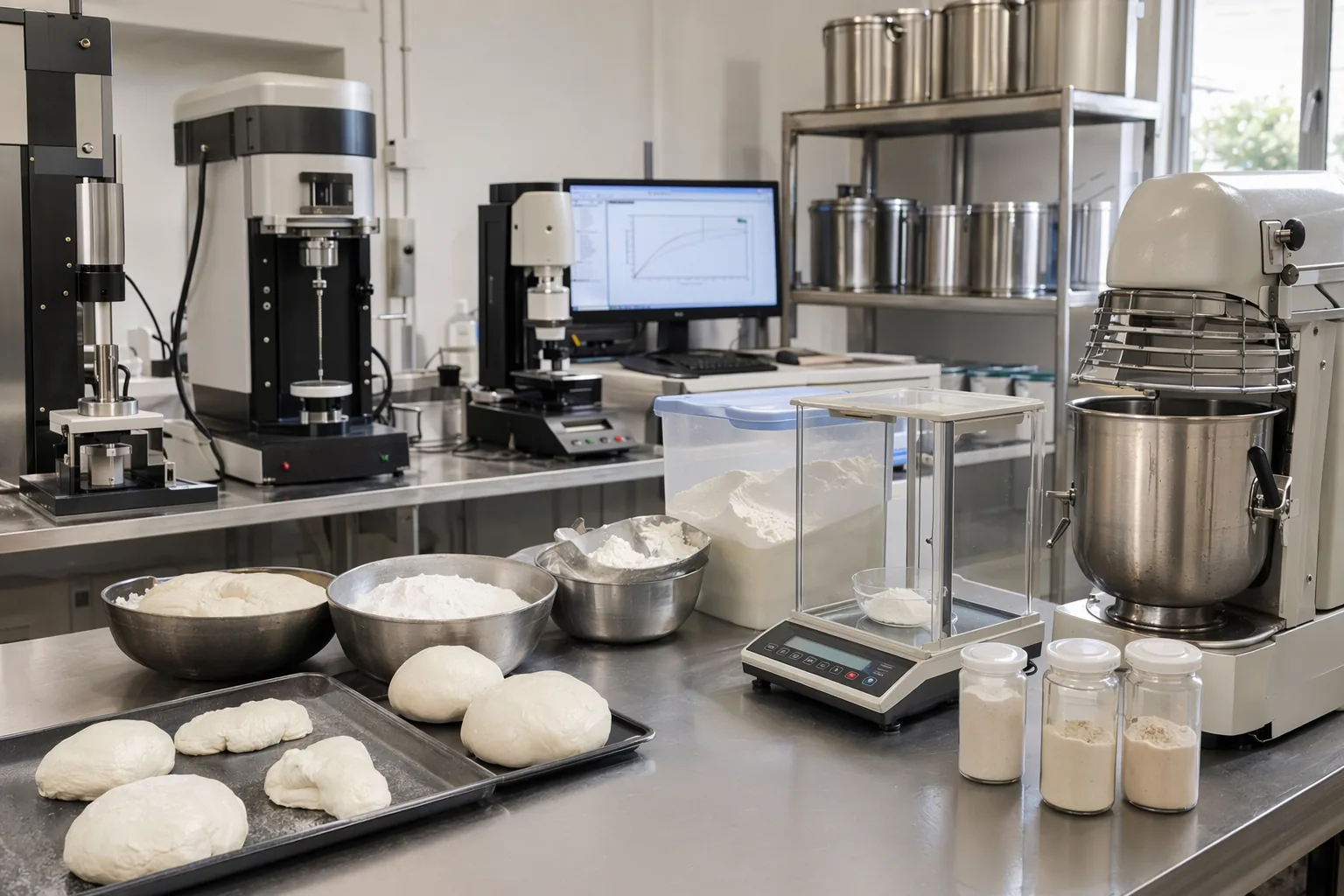
Choose a glucose oxidase supplier that supports dough-strengthening performance with transparent specifications, pilot-scale validation, and reliable technical documentation. Written for bakery manufacturers, flour mills and ingredient distributors buying glucose oxidase in bulk; grades and volumes are quoted per order.
Why Bakers Use Glucose Oxidase
Glucose oxidase is a food enzyme used in bread, buns, rolls, tortillas, and other yeast-raised or chemically leavened systems where dough strength and process tolerance matter. The GOx enzyme catalyzes the oxidation of glucose in the presence of oxygen, forming gluconolactone, which hydrolyzes to gluconic acid, and hydrogen peroxide. In dough, the hydrogen peroxide can promote oxidation of sulfhydryl groups and support disulfide bond formation in gluten proteins. The practical result is typically improved dough handling, reduced stickiness, better gas retention, and more consistent shape during proofing and baking. A qualified glucose oxidase supplier should help translate this chemistry into a dosage plan for your flour, mixing system, fermentation profile, and finished-product target. Performance depends on substrate availability, oxygen incorporation during mixing, water absorption, salt, reducing agents, and interactions with other enzymes such as xylanase or amylase.
Primary function: oxidative dough strengthening • Common use: pan bread, buns, rolls, tortillas, and frozen dough • Key variables: flour quality, oxygen, mixing energy, and proof time
Starting Dosage and Process Conditions
For baking formulation work, a practical starting screen is often 5–50 g of commercial glucose oxidase preparation per metric ton of flour, with exact dosing adjusted by declared activity and carrier concentration. Some highly concentrated products may require lower use rates, so always convert trials to activity units where the supplier provides a validated assay. Glucose oxidase generally performs in mildly acidic to near-neutral dough systems, commonly around pH 4.5–7.0, with useful activity during mixing, resting, and early proofing. Activity is typically favored in moderate processing temperatures, often around 25–45°C, and the enzyme is expected to lose activity during baking as internal crumb temperatures rise. Avoid over-oxidation: too much glucose oxidase can create tight dough, reduced extensibility, lower volume, or dry eating quality. Run a ladder trial across low, mid, and high levels against a no-enzyme control.
Suggested trial ladder: 5, 15, 30, and 50 g/MT flour • Typical dough pH window: about 4.5–7.0 • Typical active processing range: about 25–45°C before bake kill
Formulation Interactions to Check
Glucose oxidase baking results are formulation-specific because the enzyme depends on glucose, oxygen, and dough redox balance. Flour with higher damaged starch, added sugar, malt, or amylase systems may provide more fermentable sugars, but yeast also competes for glucose during fermentation. Mixing intensity matters because oxygen incorporation can influence the oxidation of glucose and the downstream strengthening effect. Ascorbic acid, L-cysteine, emulsifiers, vital wheat gluten, xylanase, lipase, and amylase can all change the final dough response. In reducing formulations, glucose oxidase may restore some structure; in already strong flour, it may overtighten the dough. When replacing chemical oxidants or reducing their level, compare mixing tolerance, machinability, proof stability, and finished texture. A technical supplier should recommend whether to add the enzyme directly to flour, preblend it into an improver, or dose it through a controlled micro-ingredient system.
Check compatibility with ascorbic acid and reducing agents • Evaluate interaction with amylase, xylanase, lipase, and emulsifiers • Confirm distribution in flour premixes or improver blends
QC Plan for Pilot Validation
Pilot validation should connect analytical QC with bakery performance. Start with incoming raw material checks: confirm the COA activity, lot number, appearance, moisture guidance, carrier, and recommended storage conditions. During bench trials, measure dough pH, absorption, mixing time, temperature after mixing, and stickiness. Use farinograph, extensograph, alveograph, or texture analysis where available to quantify strength and extensibility. In pilot baking, monitor dough handling, divider and molder performance, proof height, oven spring, loaf volume, crumb grain, sliceability, and shelf-life texture. If peroxide concerns are relevant to your product category, discuss appropriate residual or indirect checks with your quality team. Compare glucose oxidized performance against a control and current improver system across multiple flour lots. Approval should be based on repeatability, not a single successful bake.
Record activity units and lot traceability for every trial • Test at least two flour lots before approval • Track dough rheology and finished-product quality together
How to Qualify a Glucose Oxidase Supplier
A strong glucose oxidase supplier should provide more than a price quote. Request a current TDS for activity, dosage guidance, pH and temperature profile, carrier system, solubility or dispersibility, and storage requirements. Ask for a lot-specific COA covering activity and agreed quality attributes, plus an SDS for safe handling in industrial environments where enzyme dust exposure must be controlled. Confirm regulatory suitability for the countries where the finished bakery product will be sold, and ask whether the enzyme is supplied as a powder, granule, or liquid. Evaluate lead time, minimum order quantity, batch consistency, packaging, shelf life, change-control communication, and technical support. For cost-in-use, calculate enzyme cost per metric ton of flour and per finished unit, then compare against yield, waste reduction, dough tolerance, and any reformulation savings.
Required documents: COA, TDS, SDS, and regulatory statement • Commercial checks: MOQ, lead time, packaging, shelf life, and traceability • Decision metric: repeatable performance and cost-in-use
Technical Buying Checklist
Buyer Questions
Glucose oxidase converts glucose and oxygen into gluconolactone and hydrogen peroxide; gluconolactone then hydrolyzes to gluconic acid. In dough, the hydrogen peroxide can support oxidation of gluten protein sulfhydryl groups, improving dough strength and gas retention. The practical benefit may include better machinability, less stickiness, improved proof tolerance, and more consistent volume when the dose is validated.
Choose a supplier that provides technical formulation support, not only a price. Request a TDS, lot-specific COA, SDS, activity method, storage conditions, carrier details, and regulatory suitability for your sales markets. Then run bench and pilot trials across your flour lots and process conditions. Final selection should consider repeatability, cost-in-use, lead time, packaging, shelf life, and change-control communication.
A common screening range for commercial glucose oxidase baking preparations is about 5–50 g per metric ton of flour, depending on activity concentration and formulation goals. Test a no-enzyme control plus low, medium, and high levels. Watch for both benefits and over-oxidation, including tight dough, reduced extensibility, low volume, or dry texture. Supplier activity units should guide final dosage.
Glucose Oxidase for Research & Industry
Need Glucose Oxidase for your lab or production process?
ISO 9001 certified · Food-grade & research-grade · Ships to 80+ countries
Frequently Asked Questions
What does glucose oxidase do in baking?
Glucose oxidase converts glucose and oxygen into gluconolactone and hydrogen peroxide; gluconolactone then hydrolyzes to gluconic acid. In dough, the hydrogen peroxide can support oxidation of gluten protein sulfhydryl groups, improving dough strength and gas retention. The practical benefit may include better machinability, less stickiness, improved proof tolerance, and more consistent volume when the dose is validated.
How should a bakery choose a glucose oxidase supplier?
Choose a supplier that provides technical formulation support, not only a price. Request a TDS, lot-specific COA, SDS, activity method, storage conditions, carrier details, and regulatory suitability for your sales markets. Then run bench and pilot trials across your flour lots and process conditions. Final selection should consider repeatability, cost-in-use, lead time, packaging, shelf life, and change-control communication.
What dosage of glucose oxidase should we test first?
A common screening range for commercial glucose oxidase baking preparations is about 5–50 g per metric ton of flour, depending on activity concentration and formulation goals. Test a no-enzyme control plus low, medium, and high levels. Watch for both benefits and over-oxidation, including tight dough, reduced extensibility, low volume, or dry texture. Supplier activity units should guide final dosage.
Wholesale Glucose Oxidase: Request a Quote
For manufacturers, distributors and resellers: send the application, the quantity and the destination country for a quote. Turn This Guide Into a Supplier Brief Request a glucose oxidase baking sample, COA/TDS/SDS package, and pilot-trial dosage plan from EnzymeFocus. See our application page for Glucose Oxidase Method Reagent for Oxidation Control at /applications/glucose-oxidase-method-peroxidase/ for specs, MOQ, and a free 50 g sample.
Contact Us to Contributehello@mail.enzymefocus.com